
01
Chemicals context
Speciality and bulk chemical manufacturers selling to technical buyers.
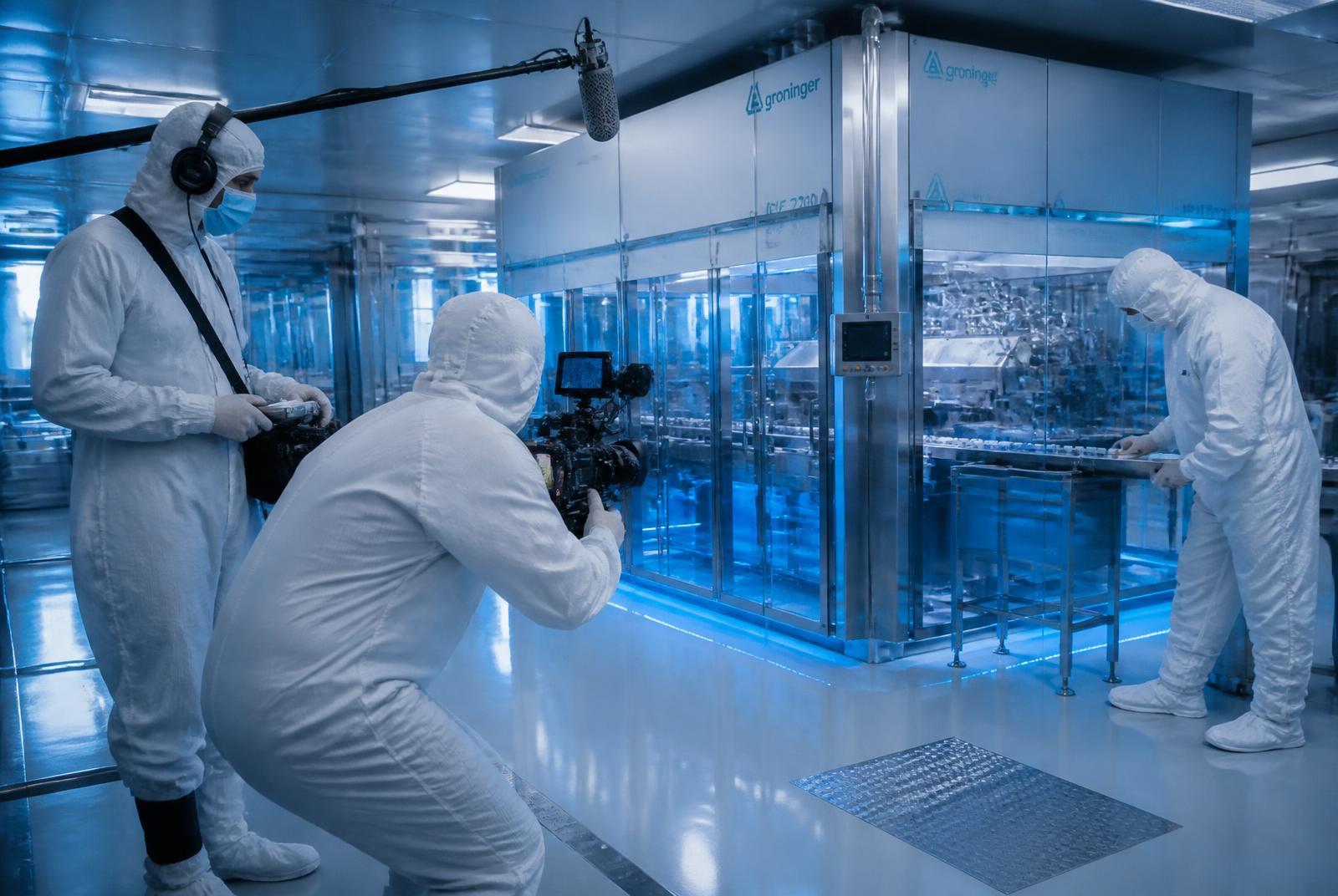
For chemicals teams, training videos sits inside an approval chain, not outside it. Hazard-area filming restrictions and MSDS-accurate messaging. We build that into the schedule rather than discovering it at the sign-off stage.
- Process animation — briefed, scripted and delivered as a distinct asset rather than a cutdown afterthought.
- Plant capability — briefed, scripted and delivered as a distinct asset rather than a cutdown afterthought.
- Safety training — briefed, scripted and delivered as a distinct asset rather than a cutdown afterthought.
- Application demos — briefed, scripted and delivered as a distinct asset rather than a cutdown afterthought.
02
What good looks like in this sector
Process animation explains what cameras legally cannot enter.
Production is the easy part; agreeing what the film must achieve is the work. In chemicals, the most common failure is a film that is technically excellent and commercially silent — beautiful footage that never states the proposition. We test the script against the buying decision before the camera is booked.
03
What training video production actually involves
Modular SOP and onboarding video built for an LMS, with assessment points baked in.
Production is the easy part; agreeing what the film must achieve is the work. For training videos, that means deciding early whether the film is doing persuasion work, explanation work or proof work — because those three jobs need different structures, different running times and different crews.
A typical engagement runs 4-8 weeks and is delivered by instructional designer, director, dop, animator. The technical package is built around sony fx6, teleprompter rig, screen capture suite, scaled up or down against the brief rather than the invoice.
04
What you receive
Deliverables are agreed in writing before the shoot, so nothing is negotiated after the fact. The standard package for training videos includes:
- Module series
- SCORM-ready exports
- Knowledge-check slates
- Regional language dubs

05
How we run the project
Six stages, each with a named owner and a dated checkpoint.
- Post production: Offline cut, client review, online conform, colour grade, sound mix and graphics. You see the film at rough cut, fine cut and final.
- Delivery and measurement: Platform-specific masters, captions, thumbnails and an asset index. We review performance after 30 days and feed it into the next brief.
- Discovery: A 90-minute session with the people who own the outcome. We leave with the audience, the proposition and the single action the film has to drive.
- Strategy and script: A written treatment and shooting script, reviewed against the brief. Two revision rounds are built into the schedule so feedback does not delay production.
- Pre-production: Recce, permissions, casting, art direction and a call sheet issued 72 hours ahead. Everything that can be decided before the shoot day is decided before the shoot day.
- Production: A crew sized to the brief. We shoot to the edit, capture protection coverage, and review selects with you at wrap.
06
Investment and what moves the number
Training Video Production projects typically sit between Rs 2L - Rs 20L. The variables that move that figure are crew size, number of shoot days, cast and location fees, and the depth of post production.
We quote in three tiers against the same script so you can see exactly what an extra day or an extra grade session buys. What we do not do is win the brief on price and rebuild the margin through change requests.
- Included as standard: a locked shooting script before any kit is booked.
- Included as standard: day-rate transparency with no post-shoot surprises.
- Included as standard: footage backed up in triplicate before the unit leaves site.
- Included as standard: colour and audio finished in a calibrated suite, not on a laptop.

07
Where we film chemicals projects in Mumbai
Sector sites cluster in specific pockets of the MMR, each with its own access process.
- Digha (Navi Mumbai) — Manufacturing sheds, estates and back-of-house operations that need capability films. Anchored around Digha node. Briefs here skew to founder films, product stories and recruitment content. Estate gate pass plus a plant EHS clearance and safety briefing.
- Karanjade (Navi Mumbai) — Planned townships and new nodes with wide roads and modern architecture. Anchored around Karanjade node. Most work here is capability films, customer testimonials and launch content. Township or CIDCO permission for public areas; estate pass for gated pockets.
- Khandeshwar (Navi Mumbai) — Planned townships and new nodes with wide roads and modern architecture. Anchored around Khandeshwar station. Typical requests are brand films, social cutdowns and event coverage. Township or CIDCO permission for public areas; estate pass for gated pockets.
- Roadpali (Navi Mumbai) — Neighbourhood retail, clinics, schools and family-run businesses. Anchored around Roadpali sectors. Demand runs to explainers, training modules and investor-facing films. Society NOC for interiors and ward permission for street-level exteriors.
- Sukapur (Navi Mumbai) — Planned townships and new nodes with wide roads and modern architecture. Anchored around Sukapur node. Clients here commission campaign films, retail loops and category videos. Township or CIDCO permission for public areas; estate pass for gated pockets.
08
Five ways chemicals training videos projects go wrong
Most failed video projects fail for the same handful of reasons. These are the ones we plan against.
- Approving a script by committee: Every extra approver adds a message. Nominate one decision maker and let them arbitrate.
- Shooting without a distribution plan: A film with no media plan and no owner on the marketing side quietly dies on a shared drive.
- Underestimating audio: Viewers forgive soft focus. They abandon a video with bad sound within seconds.
- Skipping the recce: Most Mumbai overruns trace back to a location nobody visited before the shoot day.
09
Working with us
We are a Mumbai production company that works to a written scope, a fixed schedule and an agreed deliverable list. Briefs come in from marketing heads, founders, HR leads and agency partners, and all of them get the same first step: a conversation about the outcome.
If a video is not the right answer, we will say so. That has cost us projects and won us clients.
FAQ
Frequently asked questions
Why does training video production need a sector-specific approach in chemicals?
Hazard-area filming restrictions and MSDS-accurate messaging. A generic script will fail review; a sector-aware one clears in a single pass.
What does training video production cost for a chemicals client?
Rs 2L - Rs 20L, driven by shoot days, sites, languages and post depth rather than by sector.
How long does the project take?
4-8 weeks, plus your internal compliance review windows, which we schedule explicitly rather than assume.
What do we receive at the end?
Module series, SCORM-ready exports, Knowledge-check slates, Regional language dubs, with regional language versions quoted per language.
Can you shoot inside restricted or regulated sites?
Yes. We handle EHS briefings, gate passes, SEZ and plant clearances, and work to your site's safety protocol.
Explore the cluster
Related pages in this topic cluster
Other formats for Chemicals
Sibling spokes under the same sector hub- Digital Ad Film Production for ChemicalsRs 2.5L - Rs 12L
- Product Video Production for ChemicalsRs 1.8L - Rs 15L
- Explainer Video Production for ChemicalsRs 1.2L - Rs 6L
- 2D Animation Services for ChemicalsRs 1.5L - Rs 9L
- 3D Animation Services for ChemicalsRs 3L - Rs 30L
- Motion Graphics Design for ChemicalsRs 90K - Rs 7L
- Video Editing Services for ChemicalsRs 35K - Rs 4L
- Video Post Production for ChemicalsRs 1.2L - Rs 14L
- Corporate Documentary Production for ChemicalsRs 6L - Rs 35L
- Testimonial Video Production for ChemicalsRs 85K - Rs 5L
Training Video Production in other sectors
Same service, different sector- Training Video Production for PharmaceuticalMR detailing films
- Training Video Production for ManufacturingPlant capability films
- Training Video Production for Information TechnologyPlatform demos
- Training Video Production for Real EstateProject films
- Training Video Production for HealthcareDoctor profiles
- Training Video Production for EducationCampus films
- Training Video Production for Ecommerce and D2CPerformance ad batches
- Training Video Production for HospitalityProperty films
Back to the hubs
Parent pages for this clusterRelated guides
Long-form guides in this topic cluster- Testimonial Video Production Cost in Mumbai: Full Price Breakdown9 min read
- Safety Induction Video Production Cost in Mumbai: Full Price Breakdown9 min read
- Factory Video Production Cost in Mumbai: Full Price Breakdown9 min read
- Video Scriptwriting Services Cost in Mumbai: Full Price Breakdown9 min read
- Video Production Agency Services Cost in Mumbai: Full Price Breakdown9 min read
- CSR Video Production Cost in Mumbai: Full Price Breakdown9 min read