
Key takeaways
- Lock the outcome before the format. The film's job decides its length, not the reverse.
- File permissions in week one; Mumbai lead times are the most common cause of a moved shoot date.
- Nominate a single approver with authority to sign off the script.
- Typical end-to-end: 1-3 weeks. Budget: Rs 1.5L - Rs 12L.
01
Start from the decision, not the format
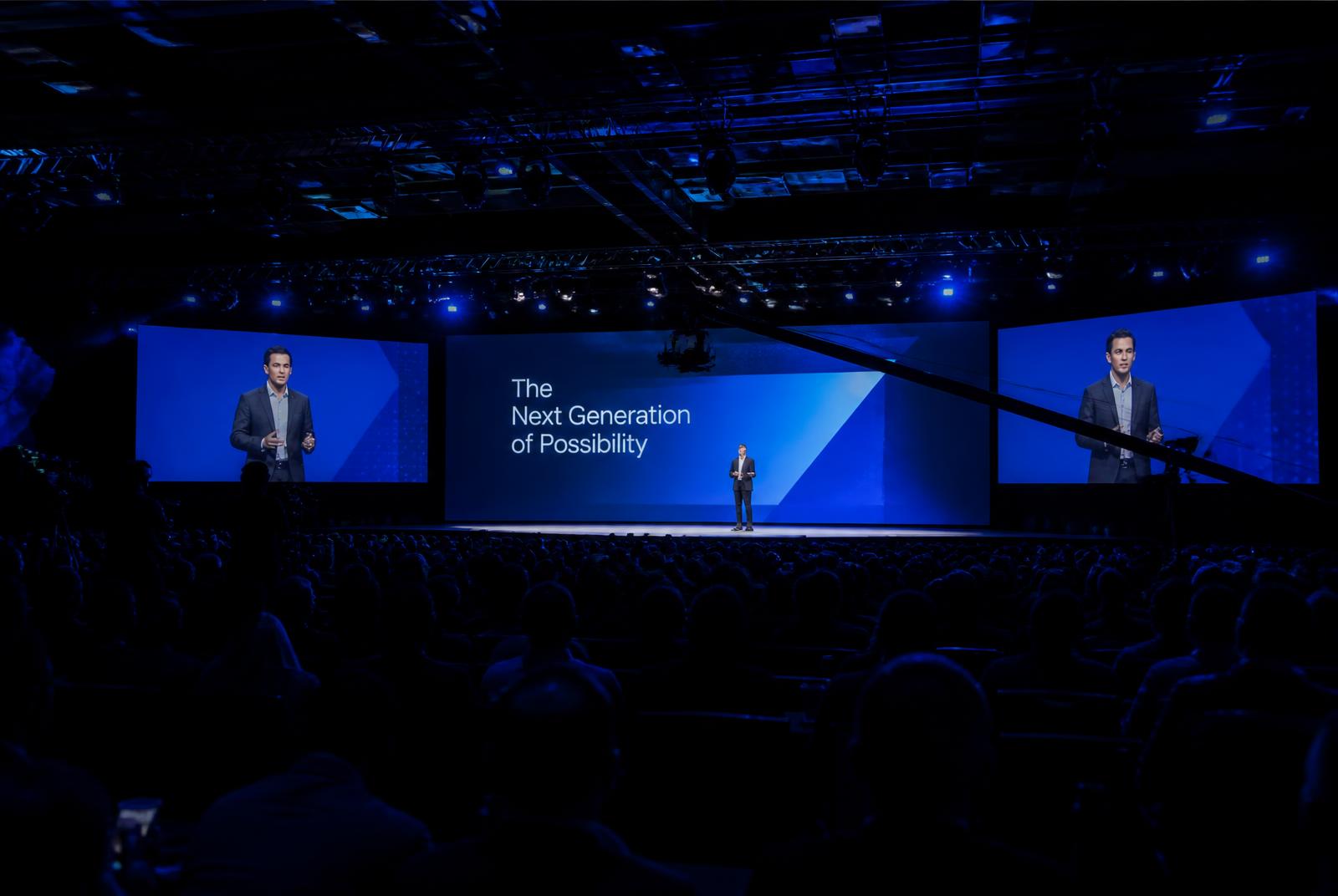
The single most useful hour in any conference filming project is the one spent deciding what the viewer must do differently after watching. Multi-track conference capture with clean feeds, slide sync and speaker-ready deliverables. That outcome — a year of on-demand content from a two-day event — dictates structure, running time, tone and where the film sits in the funnel. Skip it and you get a technically competent video that nobody can evaluate, because there is no agreed definition of working.
Write the brief in one paragraph: who is watching, what they currently believe, what they should believe afterwards, and the single action that follows. If the brief cannot survive that compression, it is not a brief yet — it is a wish list, and wish lists are what produce four-minute films that nobody finishes.
Agree the success metric in the same session. It changes production decisions immediately: a film measured on completion rate is cut differently from one measured on qualified enquiries, and knowing which one you are making prevents an expensive argument at fine cut.
- 01The audience is named specifically, not as 'customers' or 'stakeholders'
- 02One sentence states what the viewer should believe afterwards
- 03One action is defined — enquire, apply, adopt, comply, buy
- 04The success metric and its benchmark are written down
- 05A single approver with sign-off authority is named
- 06The distribution plan and channel specs exist before production
- 07The budget band and the drop-dead delivery date are both known
02
Script, storyboard and the approval chain
Scripting is where cost is controlled. Every structural problem caught on a page costs nothing; the same problem caught in the grade costs a reshoot. We work to a written treatment first — tone, structure, key scenes — then a full shooting script, and both go through the approval chain before any kit is booked.
Map the approval chain honestly at kickoff. In most Mumbai organisations it is longer than marketing admits: brand, legal, the business unit sponsor, and often a regional or global sign-off. Each additional reviewer adds a message to the film and a round to the schedule, which is why nominating one arbiter to resolve conflicting feedback is worth more than any efficiency in production.
Two revision rounds are built into our schedules. Projects that exceed them almost always share one cause: feedback gathered sequentially rather than consolidated. Collect every comment into a single document, resolve internal contradictions before sending, and the two rounds are enough.
03
Recce, permissions and Mumbai's real lead times
The recce is the cheapest insurance in production. An hour at the location tells you where the power is, where the noise comes from, whether the lift takes a lighting stand, and which window has the sun at 3pm. Most Mumbai schedule overruns trace back to a location nobody visited beforehand.
Permissions vary enormously by area and issuing authority — municipal wards, estate managers, MIDC gate offices, MMRDA, railway or port authorities, and DGCA for anything airborne. Lead times run from two days for a private estate to three weeks for institutional or municipal exteriors, so filing happens in week one, in parallel with scripting, not after script lock.
| Area | Zone | Permission route | Access note |
|---|---|---|---|
| Roadpali | Navi Mumbai | Society NOC for interiors and ward permission for street-level exterio | Compact units and early call times; parking is the binding constraint. |
| Sukapur | Navi Mumbai | Township or CIDCO permission for public areas; estate pass for gated p | The easiest large-unit access in the region, with room for cranes and |
| Millennium Business Park | Navi Mumbai | Building facility desk approval and a security-cleared crew list. | Service lifts and basement loading; weekend access is the easiest wind |
| Thane Belapur Road | Navi Mumbai | Estate gate pass plus a plant EHS clearance and safety briefing. | Estate roads take full technical units and generators without traffic |
| Navade | Extended MMR | Estate gate pass plus a plant EHS clearance and safety briefing. | Estate roads take full technical units and generators without traffic |
| Khopoli | Extended MMR | Estate gate pass plus a plant EHS clearance and safety briefing. | Estate roads take full technical units and generators without traffic |
Representative sample of areas we shoot in weekly.

04
Crew, kit and what actually needs to be on the call sheet
The crew list should follow the brief, not the invoice. For conference filming the working core is technical director, camera crew, audio engineer, stream operator, built around multi-cam ptz plus fx6, blackmagic iso recording. Adding roles beyond that is justified when the film needs controlled light, live sound with multiple speakers, or art direction — and not otherwise.
Kit is the least important variable in the finished film and the one clients ask about most. A senior DOP with a mid-range camera package produces better work than a junior operator with a flagship body, every time. Spend the argument on people.
- Confirm on the call sheet: Per-session masters with slide PiP is in scope.
- Confirm on the call sheet: Keynote highlight film is in scope.
- Confirm on the call sheet: Speaker promo cutdowns is in scope.
05
Building a schedule that survives Mumbai
Mumbai imposes three constraints on any schedule: traffic, monsoon and access windows. Call times get set against the local peak pattern, not a generic 9am; exteriors between June and September carry a weather contingency day; and buildings with restricted service-lift hours dictate when gear can move, which in turn dictates when you can actually roll.
Build the schedule backwards from the delivery date, then add the review dates as fixed calendar entries with named owners. Publishing the review dates at kickoff is the single highest-leverage scheduling habit we have: it converts "we're waiting on feedback" from an excuse into a visible, dated dependency.
- 1
Week 1
Brief, treatment, permission applications filed, budget approved
- 2
Week 2
Script lock, recce, casting, art direction, call sheet issued 72h ahead
- 3
Week 3
Shoot. Selects reviewed at wrap; cards cloned to two drives on site
- 4
Week 4
Offline edit, rough cut review, fine cut review
- 5
Week 5
Grade, sound mix, graphics, captions, platform masters
06
Delivery, versioning and handover
One master is not a delivery. Every channel has its own aspect ratio, duration ceiling, caption behaviour and loudness spec, and a film exported once for all of them performs worse everywhere. Agree the version list at brief stage so it is scoped and priced rather than requested as a favour after delivery.
Handover should include an asset index — file names, durations, aspect ratios, where each version is meant to run, and the caption files. Six months later, when someone new inherits the campaign, that index is the difference between reusing the footage and reshooting it.
| Channel | Ratio | Duration | Caption |
|---|---|---|---|
| Website hero | 16:9 | 60–120s | Optional, autoplay muted |
| LinkedIn / Meta feed | 1:1 or 4:5 | 15–60s | Burned-in, mandatory |
| Instagram Reels / YouTube Shorts | 9:16 | 15–45s | Burned-in, mandatory |
| YouTube main | 16:9 | Full runtime | SRT sidecar |
| Internal LMS | 16:9 | Full runtime | SRT + transcript |
| Trade show loop | 16:9 | 60–90s | No audio dependency |
07
How to measure whether it worked
Most video budgets in Mumbai are approved without a success metric, which is why the second film is always harder to get signed off than the first. Decide the number before production starts and instrument for it: view-through rate at 25, 50 and 75 per cent tells you where the script loses people; click-through and assisted conversions tell you whether the proposition landed; and for internal work, completion rate against a training or onboarding cohort is the only figure that matters.
Set the benchmark honestly. A conference filming asset placed on a landing page above the fold behaves nothing like the same cut running as paid social, and comparing the two produces a false conclusion. We publish expected ranges with the delivery so the marketing team is not benchmarking a 90-second explainer against a six-second bumper.
Review at 30 days, not at launch week. The first week's numbers are dominated by internal traffic and paid burst spend. The 30-day picture is what tells you which cutdown to fund next, which thumbnail to replace, and whether the opening ten seconds needs a re-edit — a cheap fix that regularly doubles retention without a reshoot.
- 15s social cutdown78%
- 60–90s explainer54%
- 2–3 min brand film41%
- 5 min+ training module33%
Median view-through by format, brand-owned channels, Mumbai B2B and D2C clients.
08
Where these projects go wrong
Failed video projects in Mumbai rarely fail on craft. They fail on decisions made before anyone picked up a camera — an unclear owner, a brief written as a format, a review chain nobody mapped. The pattern is consistent enough that we plan against it explicitly, and it is worth checking your own project against the same list before you commission anything.
The most expensive of these is the late approver. A stakeholder who appears at fine cut with a structural objection is not asking for a revision, they are asking for a reshoot, and by then the crew is on another job and the location is booked out. Naming one arbiter at kickoff is free and saves more money than any negotiation on day rates.
- 01Skipping the recce. Most Mumbai overruns trace back to a location nobody visited.
- 02Buying the cheapest quote, then funding the real cost through change requests.
- 03Briefing a runtime instead of an outcome — 'a two-minute video' is a spec, not a brief.
- 04Adding approvers late. Every extra reviewer adds a message and a revision round.
- 05Signing off a script without a storyboard, then paying to rebuild in post.
- 06No distribution plan. A film with no media budget behind it dies on a shared drive.
- 07Cutting audio to protect the camera budget. Viewers forgive soft focus, never bad sound.
If you cannot tick all seven, the brief is not ready yet.
FAQ
Frequently asked questions
How far ahead should we start planning conference filming?
Three to four weeks before the shoot for a standard corporate project, and five to six where exteriors, drone work or institutional permissions are involved. 1-3 weeks
Who needs to be in the kickoff?
The person who owns the outcome and the person who signs off the script — ideally the same individual. Everyone else can review a document.
Do we need to write the script ourselves?
No. Most clients supply the proposition and the constraints; we write the treatment and shooting script and take it through your approval chain.
What happens if it rains on the shoot day?
Monsoon-window exteriors carry a contingency day in the schedule and a stated cost. Interiors continue regardless; we resequence the call sheet rather than lose the day.
Can you work alongside our creative agency?
Frequently. We are often the production partner behind an agency's creative, and equally comfortable owning the concept end to end.
Take it further