
Key takeaways
- Build in sequence: proof asset first, explanation second, brand third.
- Guest privacy and location release requirements.
- Property video lifts direct booking share against OTAs.
- Budget planning band across the core asset set: Rs 3–15 lakh per year for a mid-sized team.
01
What is different about hospitality
Hotels, restaurants and travel brands selling an experience in advance. That shapes everything downstream. The buying decision in this sector is rarely made by one person in one sitting, which means a single hero film is almost never the right first investment — a set of shorter, purpose-built assets mapped to stages of the decision outperforms it consistently.
Guest privacy and location release requirements. Treating that as a production constraint rather than an afterthought is what separates a schedule that holds from one that slips: we route the script through the compliance reviewer before production begins, and keep a claims-substantiation sheet alongside it so every on-screen statement has a source.
The second difference is vocabulary. Hospitality audiences detect generic corporate language instantly, and it costs credibility in the first ten seconds. Scripts here are written with someone who actually works in the function, not adapted from a template.
- Core use cases
- 4
- Typical approval chain
- 3–5 reviewers
- First asset payback
- 60–90 days
- Coverage
- Mumbai + MMR
Property films
Brand, legal, business unit
Measured on qualified enquiries
Plants, campuses, SEZs
02
The asset stack, in build order
Teams that get value from video build in sequence rather than commissioning a flagship film and hoping it works everywhere. The order below is the one we recommend to hospitality clients: start with the asset that removes the biggest objection, then the one that explains, then the one that builds preference.
Each of these is a distinct brief with a distinct metric. Bundling them into one film is the most common and most expensive mistake in the sector, because a single asset asked to do three jobs does none of them well and cannot be evaluated against any of them.
| Priority | Asset | Job it does | Budget band |
|---|---|---|---|
| 01 | Explainer Video Production | Shorter sales calls and fewer support tickets | Rs 1.2L - Rs 6L |
| 02 | 2D Animation Services | A visual language you can reuse for years | Rs 1.5L - Rs 9L |
| 03 | 3D Animation Services | Show the inside of a product without opening it | Rs 3L - Rs 30L |
| 04 | Motion Graphics Design | Consistent on-brand motion across every deck and film | Rs 90K - Rs 7L |
| 05 | Video Editing Services | Value recovered from footage sitting on a hard drive | Rs 35K - Rs 4L |
| 06 | Video Post Production | Broadcast-grade finish without five vendors | Rs 1.2L - Rs 14L |
03
Use cases that consistently earn their budget
Across hospitality clients the same handful of applications keep returning a measurable result. Each one below is briefed, scripted and delivered as a distinct asset rather than as a cutdown of something else — the cutdown approach is why so much sector video underperforms.
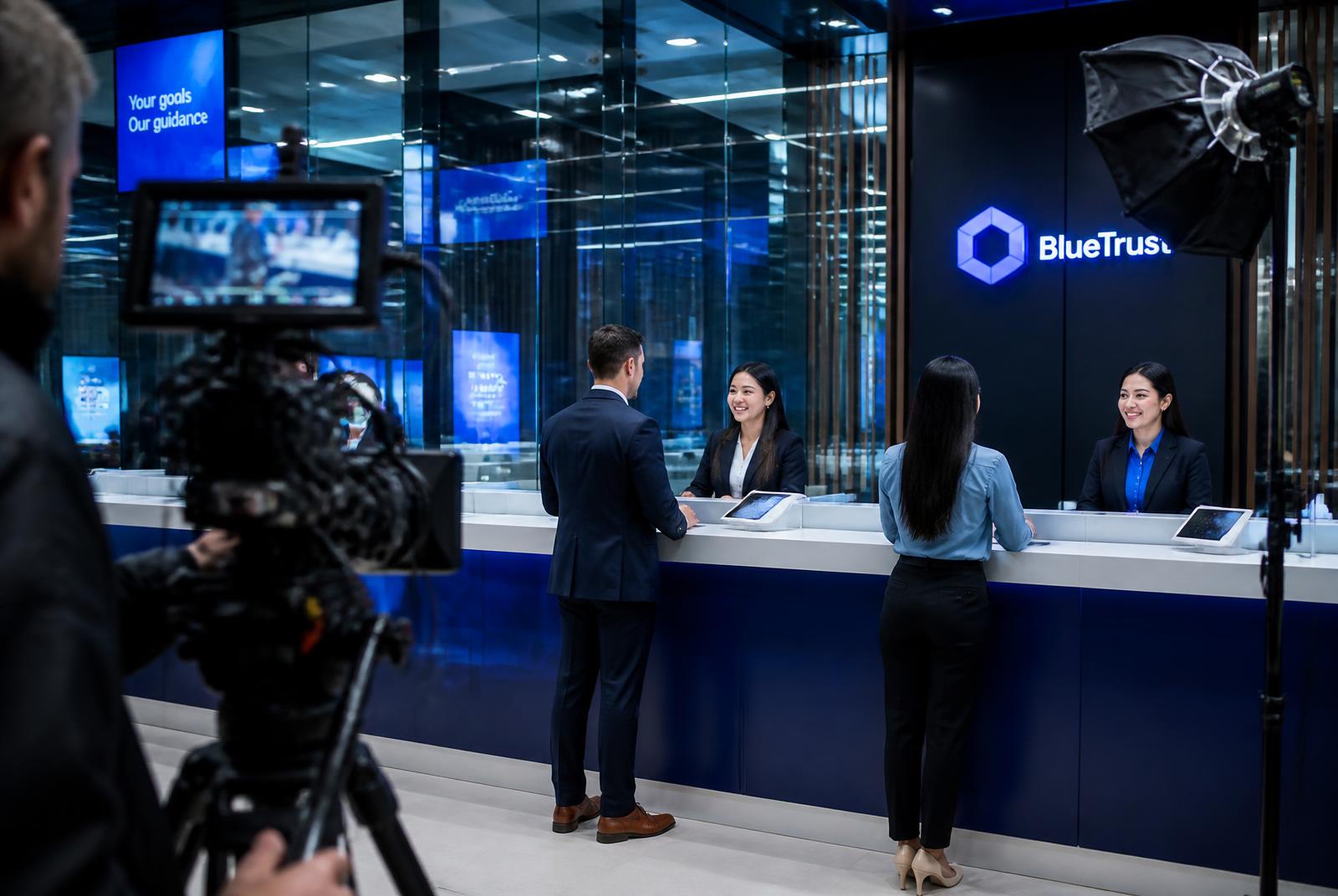
- Property films — scoped as a standalone asset with its own script, metric and distribution plan.
- Suite walkthroughs — scoped as a standalone asset with its own script, metric and distribution plan.
- F&B shorts — scoped as a standalone asset with its own script, metric and distribution plan.
- Event space reels — scoped as a standalone asset with its own script, metric and distribution plan.
04
Getting it through compliance without gutting it
Guest privacy and location release requirements. The instinct is to write safe and hope the reviewer waves it through. That produces films nobody watches. The better route is to write the strong version, then substantiate every claim in it, so the compliance conversation is about evidence rather than tone.
Practically: a claims sheet accompanies the script, mapping each on-screen statement to its source. Review happens at script stage and again at fine cut, with the same reviewer. Two checkpoints, both dated in the schedule. We have never seen a project fail compliance late when both were held.
- 1
Checkpoint 1
Script + claims-substantiation sheet reviewed before production begins
- 2
Production
Shoot or build to the approved script; no new claims introduced on the day
- 3
Checkpoint 2
Fine cut reviewed by the same compliance owner, with on-screen text locked
- 4
Sign-off
Written approval recorded against version number before distribution
- 5
Archive
Approved master, claims sheet and sign-off stored together for audit
05
Budget planning across a year
Sector teams almost always get better value from an annual plan than from project-by-project commissioning. Batching two or three films into a single production block shares the pre-production, crew mobilisation and setup cost across all of them, which typically saves 20 to 30 per cent against commissioning the same films separately over a year.
An annual plan also fixes the versioning problem. When the full asset list is known up front, cutdowns and language versions are scoped and priced at the start rather than requested individually at a premium.
- Proof assets (testimonial, case study)30%
- Explanation (product, process, training)28%
- Brand and recruitment film22%
- Always-on social cutdowns12%
- Versioning and languages8%
Indicative annual split for a mid-sized Mumbai team running video properly.
06
How to measure whether it worked
Most video budgets in Mumbai are approved without a success metric, which is why the second film is always harder to get signed off than the first. Decide the number before production starts and instrument for it: view-through rate at 25, 50 and 75 per cent tells you where the script loses people; click-through and assisted conversions tell you whether the proposition landed; and for internal work, completion rate against a training or onboarding cohort is the only figure that matters.
Set the benchmark honestly. A hospitality video asset placed on a landing page above the fold behaves nothing like the same cut running as paid social, and comparing the two produces a false conclusion. We publish expected ranges with the delivery so the marketing team is not benchmarking a 90-second explainer against a six-second bumper.
Review at 30 days, not at launch week. The first week's numbers are dominated by internal traffic and paid burst spend. The 30-day picture is what tells you which cutdown to fund next, which thumbnail to replace, and whether the opening ten seconds needs a re-edit — a cheap fix that regularly doubles retention without a reshoot.
- 15s social cutdown78%
- 60–90s explainer54%
- 2–3 min brand film41%
- 5 min+ training module33%
Median view-through by format, brand-owned channels, Mumbai B2B and D2C clients.
07
Where these projects go wrong
Failed video projects in Mumbai rarely fail on craft. They fail on decisions made before anyone picked up a camera — an unclear owner, a brief written as a format, a review chain nobody mapped. The pattern is consistent enough that we plan against it explicitly, and it is worth checking your own project against the same list before you commission anything.
The most expensive of these is the late approver. A stakeholder who appears at fine cut with a structural objection is not asking for a revision, they are asking for a reshoot, and by then the crew is on another job and the location is booked out. Naming one arbiter at kickoff is free and saves more money than any negotiation on day rates.
- 01Buying the cheapest quote, then funding the real cost through change requests.
- 02Briefing a runtime instead of an outcome — 'a two-minute video' is a spec, not a brief.
- 03Adding approvers late. Every extra reviewer adds a message and a revision round.
- 04Signing off a script without a storyboard, then paying to rebuild in post.
- 05No distribution plan. A film with no media budget behind it dies on a shared drive.
- 06Cutting audio to protect the camera budget. Viewers forgive soft focus, never bad sound.
- 07Skipping the recce. Most Mumbai overruns trace back to a location nobody visited.
If you cannot tick all seven, the brief is not ready yet.
FAQ
Frequently asked questions
Which video should a hospitality team commission first?
Property video lifts direct booking share against OTAs. In practice that points at property films as the first asset — it removes the largest objection and is the cheapest to evaluate.
How do you handle regulatory sign-off?
Guest privacy and location release requirements. We build a review checkpoint at script stage and a second at fine cut, with a claims-substantiation sheet running alongside.
Can you produce in regional languages?
Yes — subtitling and lip-sync dubbing across Hindi, Marathi, Gujarati, Tamil, Telugu, Kannada and Bengali, scoped at brief stage rather than added later.
Do you shoot inside plants, campuses and restricted sites?
Regularly, including sites requiring access clearance, safety induction and escorted movement. We brief every crew member on site rules before arrival.
What annual budget should we plan for?
A mid-sized Mumbai team running video properly plans Rs 3–15 lakh a year across the core asset set, with batching used to reduce per-film cost.
Take it further